Polygon Shield Tactics
Reviews
Description
Core Objective & Setup
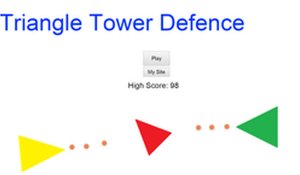
In Polygon Shield Tactics, your role is to protect a designated zone from a stream of red geometric forms. These shapes travel along a fixed path toward your territory. Your primary tool is a set of barrier units that can be positioned at key points along that route. Each barrier has distinct properties that affect how it interacts with the approaching shapes. Some may slow them down, while others deliver area effects. The game begins with a modest selection of these units, and as you progress, additional options become available. The challenge lies in choosing the right combination and placement to cover the path effectively.
Resource Flow & Upgrades
Every shape that is neutralized contributes to your resource pool. These resources serve two purposes: acquiring new barrier units and enhancing existing ones. Upgrading a unit can increase its range, effectiveness, or duration. The game encourages a balanced approach—spending too much on new units early may leave you without enough resources to strengthen them later. Conversely, focusing solely on upgrades might leave gaps in your coverage. The difficulty curve ensures that later waves demand both quantity and quality in your defensive line.
Wave Structure & Difficulty Progression
The game organizes its action into waves. Early waves introduce the basic movement patterns of the red shapes, allowing you to learn their behavior. As you advance, the shapes move faster and appear in larger groups. Some waves may introduce variations in shape size or speed, requiring you to adjust your barrier placement on the fly. The game does not rely on random elements; each wave follows a predictable pattern, so repeated play helps you refine your strategy. This structure makes the experience suitable for short sessions while still offering depth for those who want to master it.
Visual Style & Accessibility
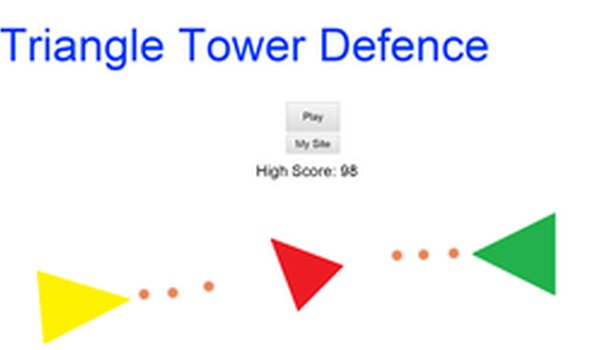
Polygon Shield Tactics uses a clean, minimal visual style. The shapes are clearly distinguishable, and the path is easy to follow. The interface is straightforward, with all controls accessible via mouse clicks. There are no complex menus or hidden mechanics. This design makes the game approachable for younger players or those new to strategy games. The lack of violent imagery or intense themes ensures it fits comfortably in a family setting. The focus remains on planning and adaptation rather than reaction speed or hand-eye coordination.
Strategic Depth & Replay Value
While the core mechanics are simple, the game offers meaningful strategic choices. The placement of each barrier matters—positioning it at a curve versus a straight section can change its effectiveness. The order in which you acquire and upgrade units also influences your success. Because the wave patterns are consistent, you can experiment with different approaches to find the most efficient setup. This gives the game replay value, as each playthrough can feel different based on your decisions. The escalating difficulty provides a steady learning curve that keeps the experience engaging without becoming frustrating.





Player Comments
Sign in to comment
You must be logged in before posting a review or rating.
No account? Create one
No comments yet. Be the first to comment!